
 11-Aug-2026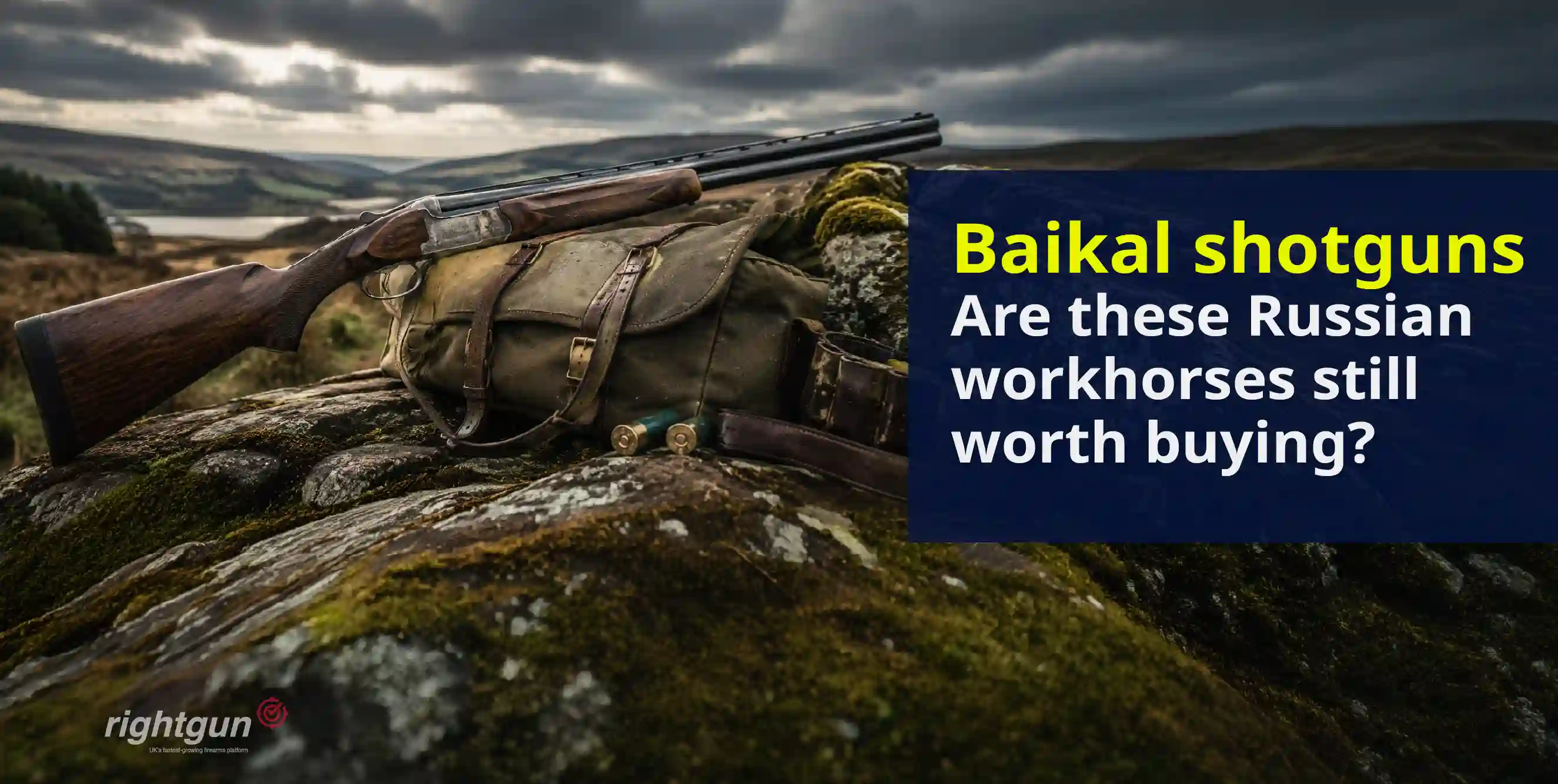
Ask any group of British shooters about their first gun, and you won’t wait long before someone mentions a Baikal. The Russian-built workhorses earned a unique place in UK shooting: unglamorous, agriculturally engineered, and almost impossible to kill. With new imports having become scarce in recent years, the question UK buyers now ask is whether a second-hand Baikal still makes sense, and the search data suggests plenty of people are asking it. Here’s an honest assessment.
The Baikal reputation: built like a tractor
Baikal shotguns came out of the Izhevsk mechanical works, a factory better known for military production, and it showed. Tolerances were tight where they mattered and rough where they didn’t. Actions were machined from solid steel with little concession to weight or elegance, chokes were fixed on most examples, and the wood was functional at best.
The result was a gun that would digest decades of heavy loads, neglect, and farm-truck life without complaint. British gunsmiths joke that the only way to wear out a Baikal is to lose it. That reputation for indestructibility, earned across tens of thousands of UK examples, is the foundation of the brand’s enduring appeal.
The models you’ll find on the UK used market
The over-and-under most commonly seen is the IJ27/MP27 family, a plain, reliable 12-bore field gun that served as the entry point into clay and game shooting for generations of British shooters. Side-by-side equivalents like the IJ58 and MP43 offer the same virtues in a traditional format, and the MP153 semi-automatic built a strong following among wildfowlers who wanted a gun that shrugged off salt marsh conditions.
Single-barrel guns such as the MP-18 appear regularly in smaller bores, including .410, simple, light guns that make honest hedgerow and pest-control tools. Whichever model you’re looking at, the mechanical story is the same: simple designs with heavy-duty parts.
What’s changed: availability
New Baikal imports into the UK have been limited in recent years, which means the used market is now the practical source. That scarcity has firmed up prices slightly at the bottom of the market, but Baikals remain among the cheapest functional shotguns in Britain, and arguably the best value-per-decade of service life available anywhere.
The flip side is that spare parts flow less freely than they once did. In practice, this matters less than you’d think: the guns rarely break, most wear parts can be sourced or made by a competent gunsmith, and the UK’s large historical Baikal population supports a healthy donor-gun supply.
Buying used: what to check
Baikals hide their sins less than polished guns, which makes inspection straightforward. Check the action closes with a positive, tight lock-up and no play at the hinge. On over-and-unders, confirm both barrels fire and the selector and safety behave. Bores should be clean; these guns often lived hard lives, and while pitting rarely stops a Baikal working, it should be reflected in the price.
Trigger pulls are typically heavy; that’s factory character rather than a fault, but grittiness or doubling needs a gunsmith’s eye. Stock fit is worth attention too: Baikal wood is chunky, and our guide to shotgun fit explains why a cheap gun that fits beats an expensive one that doesn’t. If this is your first purchase, read our companion piece on buying your first shotgun in the UK before viewing anything.
Living with a Baikal: maintenance and small improvements
Ownership is refreshingly undemanding. A basic clean after wet days, a drop of oil on the hinge pin, and a periodic check of the woodwork screws covers most of it, these guns were designed for conscript maintenance, and it shows. The heavy trigger can often be improved by a gunsmith without compromising safety, which is the single most worthwhile upgrade on most examples.
Some owners have chokes opened or the stock cut and padded to fit, both sensible investments given the low cost of entry. What’s rarely worth doing is cosmetic restoration: rebluing and rewooding a Baikal costs more than the gun and adds nothing to its resale value. Spend the money on cartridges instead, and let the gun wear its history; patina is part of the Baikal character, and buyers on the used market expect it.
Baikal vs the modern budget competition
Today’s entry-level market is dominated by Turkish-built guns offering multichokes, lighter weight, and a shinier finish for modest money. Against them, a used Baikal trades features for proven longevity: the Turkish guns are better specified, but few have yet demonstrated the forty-year working life that ordinary Baikals routinely deliver.
There’s also the value equation. A used Baikal typically undercuts new budget guns while depreciating essentially to zero; buy carefully, and you’ll get your money back whenever you sell. For a first gun bought to learn on, that’s a compelling argument. For a gun you’ll keep and cherish, handle both and let fit and feel decide; our advice on shotgun fit applies at every price point.
Who a Baikal suits, and who it doesn’t
A Baikal makes sense for the first-gun buyer proving the sport before spending serious money, the wildfowler or pest controller who needs a tool rather than a talisman, and anyone wanting a knockabout second gun for the truck or the hide. The money saved buys a lot of cartridges and lessons, which improve your shooting far faster than a better gun does.
It suits the style-conscious clay shooter less well: the handling is deliberate rather than lively, triggers are heavy, and nobody buys a Baikal for the figuring in the walnut. If your budget stretches further and refinement matters, the used market offers step-up options, but few of them will still be working as hard in forty years.
FAQs
Are Baikal shotguns any good? For reliability and value, yes, they’re famously durable and mechanically simple. They give away refinement, handling, and finish to more expensive guns, but they function season after season with minimal care.
Can you still buy Baikal shotguns new in the UK? New imports have been very limited in recent years, so the second-hand market is now the realistic route. Used examples appear regularly and remain affordable.
Are Baikal spares still available? Common wear parts can generally be sourced or fabricated by a gunsmith, and the large number of Baikals in the UK supports a steady supply of donor guns. Their simplicity works in your favour.
Is a Baikal a good first shotgun? It’s one of the classic first guns for good reason: cheap to buy, hard to damage, and easy to sell on when you upgrade. Make sure it fits you reasonably well and buy on condition.
Browse Baikal shotguns on Rightgun.uk
If a dependable workhorse sounds like your kind of gun, compare current Baikal shotgun listings and the full range of shotguns for sale from trusted UK sellers on Rightgun.uk, Britain’s dedicated marketplace for the shooting community.
Read next:
