
 06-Aug-2026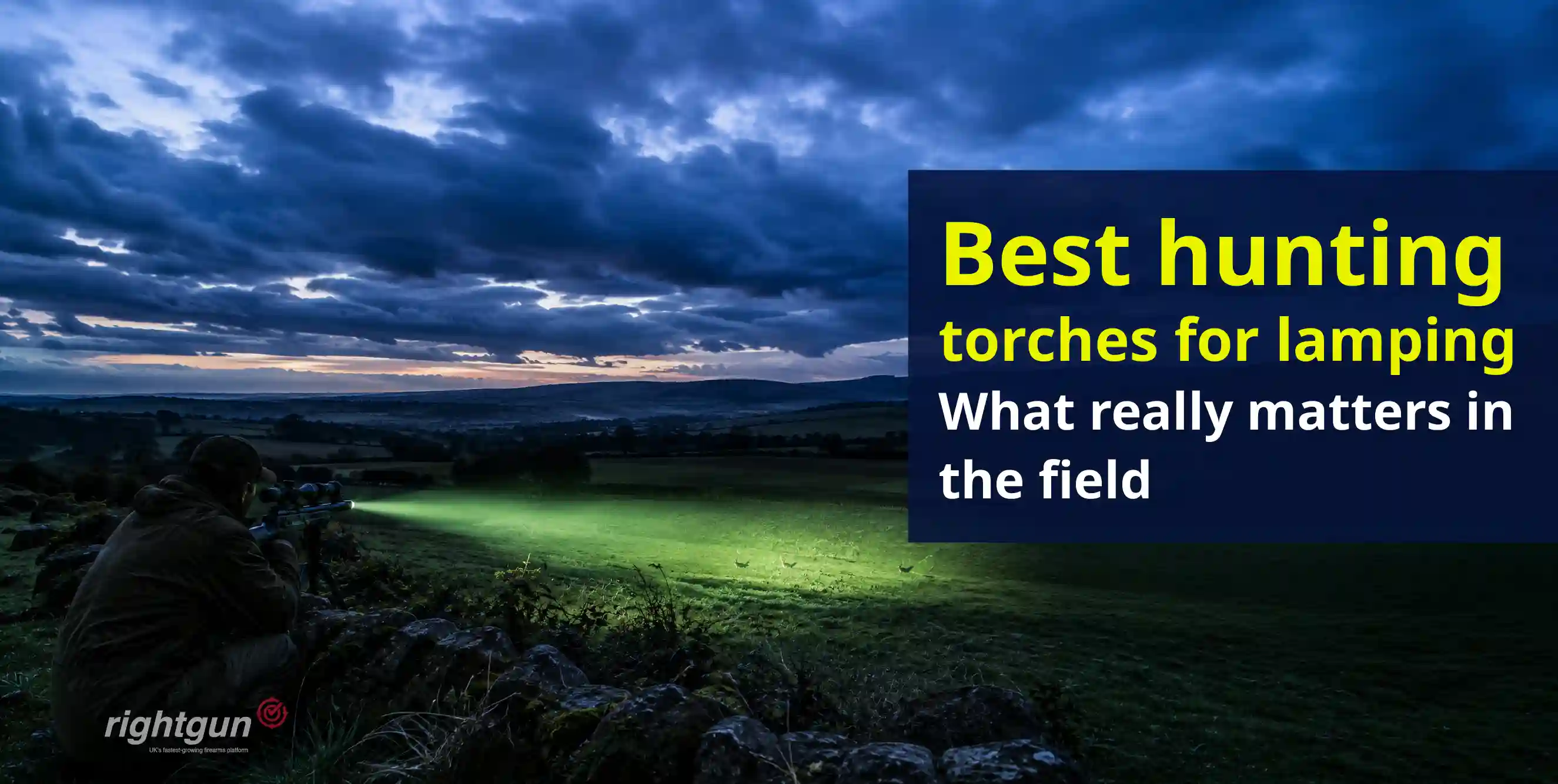
If you have ever spent a cold night on rabbit or fox control with a torch that dies halfway through, throws a beam the colour of weak tea, or works loose from the scope mount every time you close a gate, you will know that a good hunting torch is not a luxury. It is the difference between a productive night and a wasted one. Searches for hunting torches are climbing as the summer pest control season gets into full swing, so here is a straight-talking guide to choosing one that will not let you down.
Why the right torch matters more than raw power
It is tempting to buy on lumens alone. Manufacturers know this, which is why the headline number on the box keeps getting bigger. But raw output is only part of the story. A torch that floods the whole field with light will burn through batteries, spook quarry at distance and ruin your night vision every time you glance at the beam edge.
What you actually want is a tight, controllable beam with enough throw to identify your quarry positively at sensible shooting distances, a beam colour that suits the species you are after, and a runtime that comfortably outlasts your session. A well-focused torch of modest output will beat a poorly focused searchlight every night of the week.
Beam colour: White, red, or green?
This is the debate that fills forum threads every season, and the honest answer is that each colour has its place.
White light gives the best colour rendition and the clearest view through a scope. For rabbiting at closer ranges, plenty of shooters still swear by it. The drawback is that most quarry species react to it quickly, so you may only get one pass over a field before everything goes to ground.
Red light is the traditional lamping choice, particularly for foxes. Most mammals are less sensitive to red wavelengths, so a red filter or dedicated red LED lets you scan and settle on your quarry with less disturbance. The trade-off is reduced detail and shorter effective range, as your own eye is also less sensitive to red.
Green light sits between the two. It appears brighter to the human eye than red at the same output, which makes it popular for rabbits and rats, and many shooters find it less disturbing to quarry than white. If you can only afford one dedicated colour, green is a sensible all-rounder; if foxes are your main quarry, red still has the edge.
Torches with interchangeable LED modules or slide-on filters give you all three options in one unit, and for most people starting out that flexibility is worth paying for.
Scope-mounted, gun-mounted, or handheld?
How you carry the light shapes the whole session. A scope-mounted torch keeps the beam aligned with your point of aim, which is ideal when you are shooting alone. Look for a solid one-piece mount that clamps to the scope body or an adjustable mount that lets you zero the beam to your reticle. A remote pressure switch taped to the fore-end means you can light up, confirm and shoot without shifting your grip.
A handheld or head-mounted torch works best when you are lamping as a pair, with one person on the light and one on the rifle. It is also far more pleasant for general navigation, checking traps or following up shot quarry. Many experienced pest controllers carry both: a mounted torch for shooting and a small headtorch in a pocket for everything else.
Batteries and runtime: The unglamorous bit that decides everything
Modern rechargeable lithium cells have transformed hunting torches. Even so, claimed runtimes are usually measured at reduced output in laboratory conditions, and cold weather cuts battery performance noticeably. As a rule of thumb, assume you will get well under the advertised figure on a winter night at full power.
Practical advice: carry at least one spare charged cell in an inside pocket where it stays warm, choose a torch that takes a common cell size rather than a proprietary pack, and favour models with a low-voltage warning so the light dims gracefully rather than dying without notice. A torch with stepped power modes also lets you scan on low power and only step up to full for the final identification and shot.
What to look for before you buy
Beyond colour and mounting, a few details separate a torch that lasts one season from one that lasts ten. Look for a machined aluminium body with proper O-ring sealing, because lamping is a wet, muddy business. Check that the focus mechanism can be operated silently with one gloved hand. Make sure the mount and pressure switch are included or budget for decent ones, as bundled accessories vary enormously in quality. And think about throw honestly: for airgun ranges a compact unit is ample, while centrefire fox control at longer distances justifies a larger head and deeper reflector.
It is also worth remembering the wider kit picture. A torch is one part of a night shooting setup that includes a zeroed rifle, sound moderation where appropriate, and permission on the ground you shoot. Night vision and thermal spotters have become more affordable and are increasingly used alongside traditional lamps, with many shooters spotting on thermal and switching to the lamp for the shot. If your budget stretches, that combination is hard to beat, but a quality torch remains the backbone of most pest control rounds.
Frequently Asked Questions
Is lamping legal in the UK? Lamping itself, using a light at night for legitimate pest control of species such as rabbits and foxes, is lawful in the right circumstances, but night shooting is subject to rules that vary by species and by where you shoot, and you must always have the landowner’s permission. If you are unsure how the rules apply to your ground or quarry, take advice from BASC or your local firearms licensing team before you go out.
What colour torch is best for foxes? Red is the traditional and still most popular choice for foxes, as they tend to tolerate it longer than white light. Green is a good second choice and appears brighter to the human eye. Whichever you choose, keep the beam edge on the quarry rather than the full hotspot until you are ready to take the shot.
How powerful does a hunting torch need to be? For rabbits at airgun ranges, a compact torch with a focused beam is plenty. For fox control with a rimfire or centrefire, you will want noticeably more throw so you can identify the animal positively well beyond 100 metres. Positive identification is the non-negotiable: if you cannot clearly identify it, you do not shoot.
Can I mount a torch directly to my rifle? Yes, either to the scope body with a ring mount or to an accessory rail if your rifle has one. Make sure the mount holds zero alignment shot after shot, and route the pressure switch cable so it cannot snag.
Find your night shooting kit on Rightgun.uk
A good torch earns its keep within a couple of outings, and the right rifle underneath it matters just as much. Browse the air rifle listings for a dedicated rabbiting setup, the BSA R10 and Air Arms S510 are proven night-time performers, or explore the equipment listings for lamps, mounts and accessories from sellers across the UK shooting community. If you are stepping up to fox control, our guide on the difference between a .308 vs 7.62 NATO round rifles in the UK is a sensible next read.
Read next:
