
 06-Oct-2026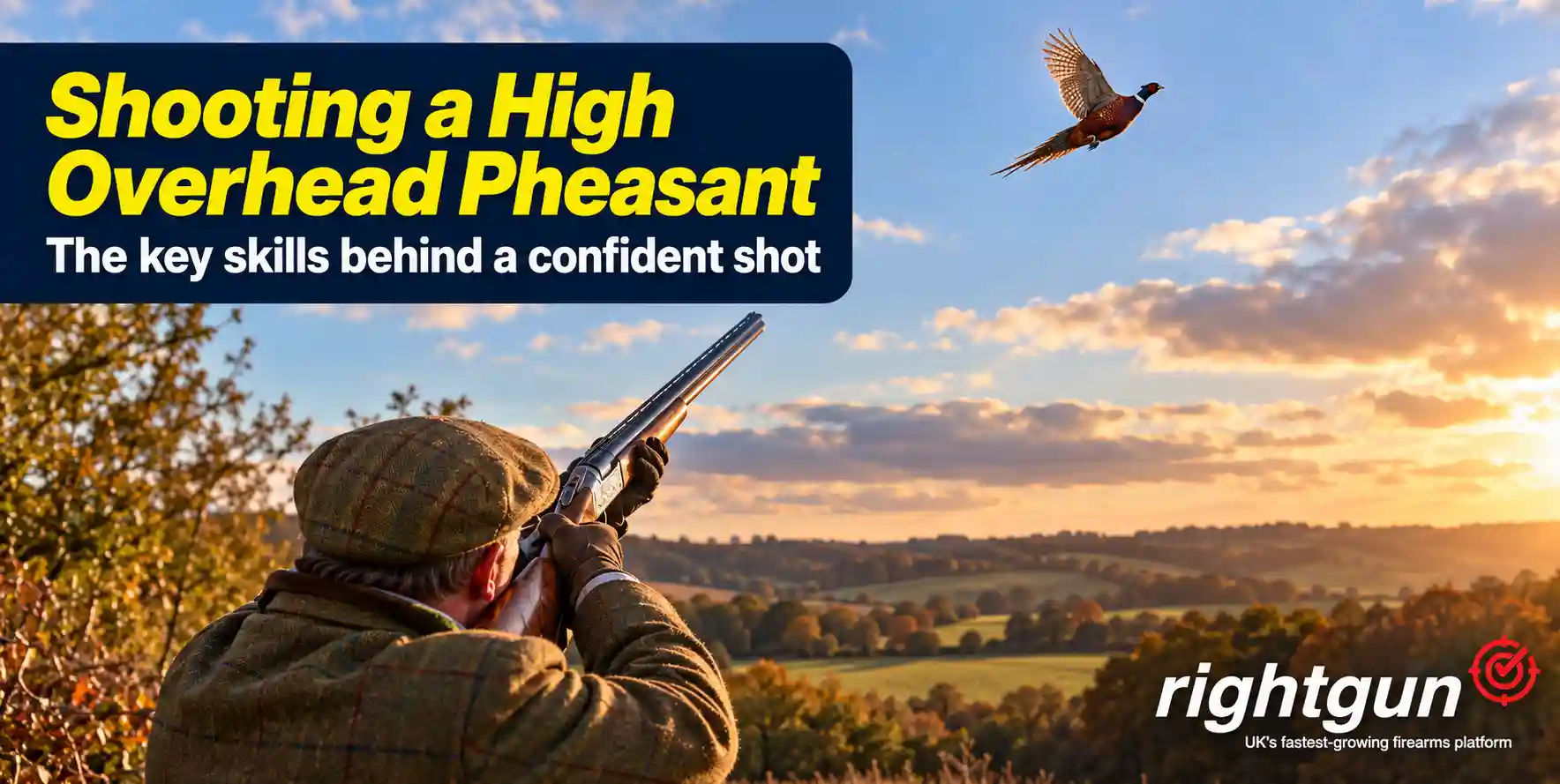
The short answer is that a good shot at a tall bird comes from four things: a balanced stance, an early and smooth gun mount, picking the bird up in front of you, and keeping the gun moving through the shot rather than stopping to aim. Almost everyone who struggles with high pheasants is not short of ability. They are short of time, or rather they think they are. A tall bird gives you longer to see it, and that extra time tempts you to check your swing, tense your shoulders, and finish behind.
This guide explains the technique in general terms, the shoot-day safety principles that matter most on overhead birds, and the point at which the best shot is no shot at all. For exact distances, leads and cartridge or choke choices, the honest answer is that they vary with the bird, your gun, the load and the conditions, so a session with a good coach at a clay ground is worth far more than any rule of thumb in print.
Why high birds feel so much harder
A pheasant crossing at moderate height has a clear line and an obvious rhythm. An overhead bird does not. It arrives steeply; it often looks slower than it is, and your body has to do something it rarely does in everyday life: reach up and back while staying balanced.
Several things catch people out. Tall birds look far away, so guns tend to rush the mount, snatch at the trigger, or wait too long and let the bird climb out of the sweet spot. Because the target seems to hang in the sky, many shooters stop the gun to aim, and a stopped gun is a missed bird. Finally, the stance that works for a bird at head height does not work for a bird straight above, and most guns find out too late.
Browse: Beretta 686 · Browning B525 · Beretta A400 · Benelli M2 · Winchester 101
Start with your feet, weight and gun mount
Good overhead shooting begins before the bird appears. Stand with your feet a comfortable width apart, weight slightly favouring the front foot, knees soft rather than locked. Aim to be pointing your body at the place you expect to take the bird, not at your peg, because you need room to turn through the shot without winding yourself up.
As the bird comes into view, let your weight stay forward and bring the gun up to your face, rather than your face down to the gun. A consistent mount is what makes everything else work: the butt should arrive in your shoulder as your cheek meets the stock, with your head staying still and level. If you find yourself craning your neck or leaning back, the gun is probably not fitted to you, or you are trying to mount too late.
On a very tall bird, many coaches talk about letting the weight transfer back naturally as the gun goes up, rather than leaning back from the hips. Think of it as flowing with the bird, not fighting it. If your balance goes, the shot goes with it. A coach can watch your feet and tell you in minutes what a dozen missed pheasants cannot.
Browse: Beretta DT11 · Browning B725 · Beretta 694 · Perazzi MX8 · Shotguns
See the bird early and take it in front
Your eyes do most of the work in shooting. Pick the bird up as early as you safely can, ideally as it clears the trees or the top of the drive, and keep your eyes on it rather than on the barrels. If you look at the muzzle, your gun will stop. If you look at the bird, the gun tends to follow.
For an overhead bird, the idea is to meet it in front, not chase it from behind. Many shooters wait until the bird is almost above their head, by which point they are off balance and the bird is going fast across their view. Instead, bring the gun up early, let the muzzle come into the line of the bird, and take the shot while it is still coming towards you and your body is in a strong position.
Browse: Caesar Guerini shotguns · Browning shotguns · Fabarm shotguns · Miroku shotguns · Benelli 828
Keep the gun moving and finish the shot
Of all the faults on high pheasants, stopping the gun is the most common. It usually happens because the shooter tries to be precise. The cure is to keep a smooth, continuous movement from the moment the gun starts to move until after the trigger is pulled.
Try thinking of the shot as one flowing motion: mount, move, shoot, and carry on. Keep your head on the stock and your eyes on the bird, and let the gun carry through after the trigger, in the same way a golfer follows through. If you notice yourself braking as you pull, you are probably aiming, and aiming is slow.
Tension is the other enemy. Tight shoulders and a death-grip on the forend make the gun harder to move smoothly. Breathe out as the bird approaches, relax your front hand and let the gun do the work. If you do miss, take a moment before the next bird, because rushing the second barrel makes both shots worse.
Browse: Beretta 686 · Beretta SO5 · Holland & Holland shotguns · James Purdey shotguns · AYA shotguns
Safety first: Knowing when not to shoot
Overhead birds are rarely the dangerous ones, but a shoot day depends on every gun applying the same safety principles to every bird. Listen carefully to the shoot captain’s briefing and the guns’ briefing at the start of the day, and follow them. Know your safe arcs, and do not swing through the line towards other guns, beaters, pickers-up or dogs. Never shoot at low birds or at birds in line with people or dogs, however tempting the bird.
A high bird that is climbing away over the beaters or coming over the line of neighbouring pegs may still be a bird to let go, depending on the drive and the briefing. If in doubt, do not shoot. Nobody on a shoot has ever regretted letting a bird go.
Browse: Gun parts and accessories · Dogs · Hunting equipment · Safes and cabinets · Ladds Guns
Your gun, your cartridges and your practice
Technique matters more than equipment, but a gun that fits you makes tall birds much easier. If the stock is too short or too long, or the gun shoots away from where you are looking, mounting consistently becomes a battle. Getting the fit checked, or trying a few guns before you buy, is time well spent. Many game guns, from over-and-unders to side-by-sides and semi-automatics, handle tall birds well when they fit the person shooting them.
On cartridges, the right load depends on the bird, the gun and the day, so ask the shoot, your cartridge supplier or a coach rather than relying on a fixed rule. Check the shoot’s own rules on shot type too. Some shoots specify non-toxic shot, which behaves differently from lead, so it is worth patterning and practising with whatever you plan to use on the day.
The best preparation is practice on the right targets. Many clay grounds have a tower or a high-bird stand that mimics a tall pheasant, and a few lessons before the season can transform your confidence.
Browse: Beretta 686 · Browning Citori · Beretta 486 · Gun parts and accessories · Ivythorn Sporting
Frequently asked questions
Why do I keep missing high pheasants behind? Usually because the gun stops or slows as you try to aim, or because the shot is taken too late when the bird is already above you. Mount early, keep your eyes on the bird, and keep the gun moving through the shot. A coach can diagnose the exact cause in a short session.
Should I use a tighter choke for high birds? There is no single answer. It depends on the bird, the load, your gun, and your own shooting, and many shooters do well with a more open choke because their technique matters more. Pattern your gun and ask a coach.
How can I practise high pheasants out of season? Book a lesson at a clay ground with a high tower or a tall crossing target, and practise mounting at home with an unloaded gun in a safe place. Short, regular sessions beat one long one.
Is it ever right to let a high bird go? Yes. If the bird is over the line of other guns, beaters, pickers-up or dogs, or you are unsure of the safe arc, let it go. Follow the briefing on the day.
Ready to browse game guns?
If tall pheasants are on your list this season, a gun that fits you is the best place to start. Browse the latest shotgun listings on Rightgun.uk, compare makes and models, and find a game gun from sellers across the UK.
Browse: Shotguns for sale · Beretta shotguns · Browning shotguns · Gun parts and accessories · UK gun shops
Further reading: Shotgun fit explained, How to shoulder a shotgun, Best game shotguns by budget, Top guns for partridge season and Best alternatives to lead ammunition
