 20-Aug-2026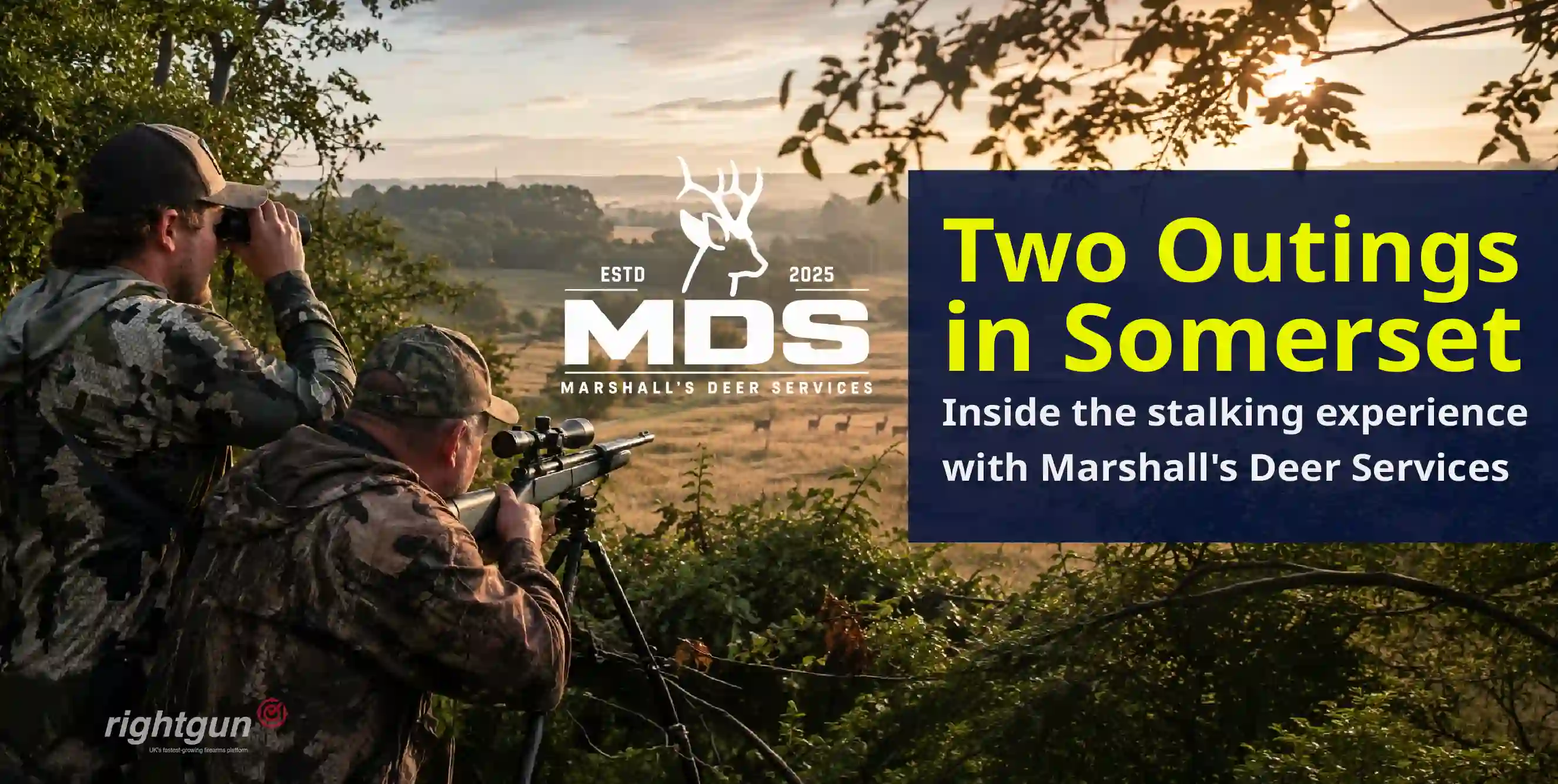
There is a particular kind of frustration familiar to anyone holding a firearms certificate without land of their own. The rifle is in the cabinet, the conditions are right, and there is nowhere legitimate to go. Guided stalking solves that problem, but the quality of the experience varies enormously depending on who is standing beside you.
I booked two outings with Marshall's Deer Services, a South West operation listed on Rightgun offering guided stalking for fallow and roe across ground in and around the Somerset levels. Two sessions, £120 each. The first was an evening high seat into last light; the second an early morning stalk on foot. This is an account of both and an honest assessment of whether the money was well spent.
The booking and the preparation
The listing gave a phone number and an email address, and the arrangement was made directly by telephone rather than through any booking system. That suited me. A short conversation established what I held on ticket, what I had shot before, and what I wanted from the outings. There was no upselling toward a trophy animal, which I appreciated. The stated position was straightforward: management animals, meat animals, or trophies, priced accordingly and discussed in advance.
Before either outing, the guide asked to see my certificate and confirm the rifle was properly conditioned for the species and ground. He also offered range time to confirm zero. This is not a courtesy. It is the mark of an operation that understands its own exposure and takes the safety of the day seriously. Any guide who does not ask to see your paperwork and your grouping before putting you behind a rifle on their ground should give you pause.
My rifle for both outings was a .243 Winchester, a calibre that needs no defence for roe and fallow in this country and which I had confirmed at 100 yards the week before.
Outing one: The evening high seat
We met in the late afternoon and walked in with plenty of daylight remaining. The ground is a mix of rolling pasture, hedgerow, and wooded valley, and the high seat we used had been positioned to watch a field edge where fallow had been moving off the timber to feed.
A word on terminology, because it matters. This is often described as a night outing, and it certainly finishes in the dark walk back to the vehicle. But under the Deer Act 1991 it is an offence to take deer at night, defined as the period from one hour after sunset to one hour before sunrise, other than under specific authorisation. Any responsible guide will bring the rifle out of action at legal last light, regardless of what is standing in front of you. Mine did, and said so before we climbed up. If a provider is vague on this point, walk away.
The high seat itself was quiet in the way that good evening high seats are. Fallow came out at distance and stayed there. A doe and follower worked along the far hedge and never presented anything approaching a shot I was willing to take. We came down empty-handed.
I do not count that outing as a failure, and neither should you. An evening in a seat watching deer behave normally on ground you do not know is how you learn the ground. The guide talked quietly through what the fallow were doing and why, where they had come from, and where the wind would put them on a different evening. That commentary is a substantial part of what £120 buys.
Outing two: The morning stalk
The second outing began well before first light, on foot rather than from a seat. This was the better of the two, and the more instructive.
Morning stalking rewards patience and punishes haste. We worked into the wind along the bottom of a wooded valley, stopping far more often than a novice would think necessary, glassing edges and letting the light come up. The guide set the pace, which was slower than my own instinct, and he was right to.
A roe buck stepped out onto the edge of a ride at a little over eighty yards, broadside and settled. Sticks up, safety off, and a clean chest shot that put him down within a few yards. The guide had already told me where he wanted the animal to fall relative to the vehicle track, which tells you something about how often he has done this.
The gralloch was carried out promptly and properly, with attention paid to inspection of the carcass and to hygiene. If you intend to take the meat, that matters as much as the shot does.
Assessment
Two outings at £120 each are £240 for one roe buck and a considerable amount of ground knowledge. Judged purely on animals recovered, that is not cheap. Judged as guided stalking with a professional on unfamiliar land, including safety checks, high seat access, fieldcraft instruction, and a competent gralloch, it is fair value and consistent with what South West operations charge.
What I would highlight for anyone considering a booking:
The certificate and zero checks were carried out without being asked for. That is the single best indicator of a serious operation.
The legal position on last light was stated plainly and observed.
The pricing is discussed by species and by purpose rather than presented as a fixed menu, so establish what you are paying for before you travel.
Novices are genuinely welcomed, and the instruction offered is real instruction rather than a hand on the shoulder.
For a certificate holder without permission of their own, two outings of this kind are a reasonable way to get behind a rifle on decent ground with someone who knows it. I would book again, and I would ask for the morning stalk.
Book your next hunt with Marshall's Deer Services
Read next:
